
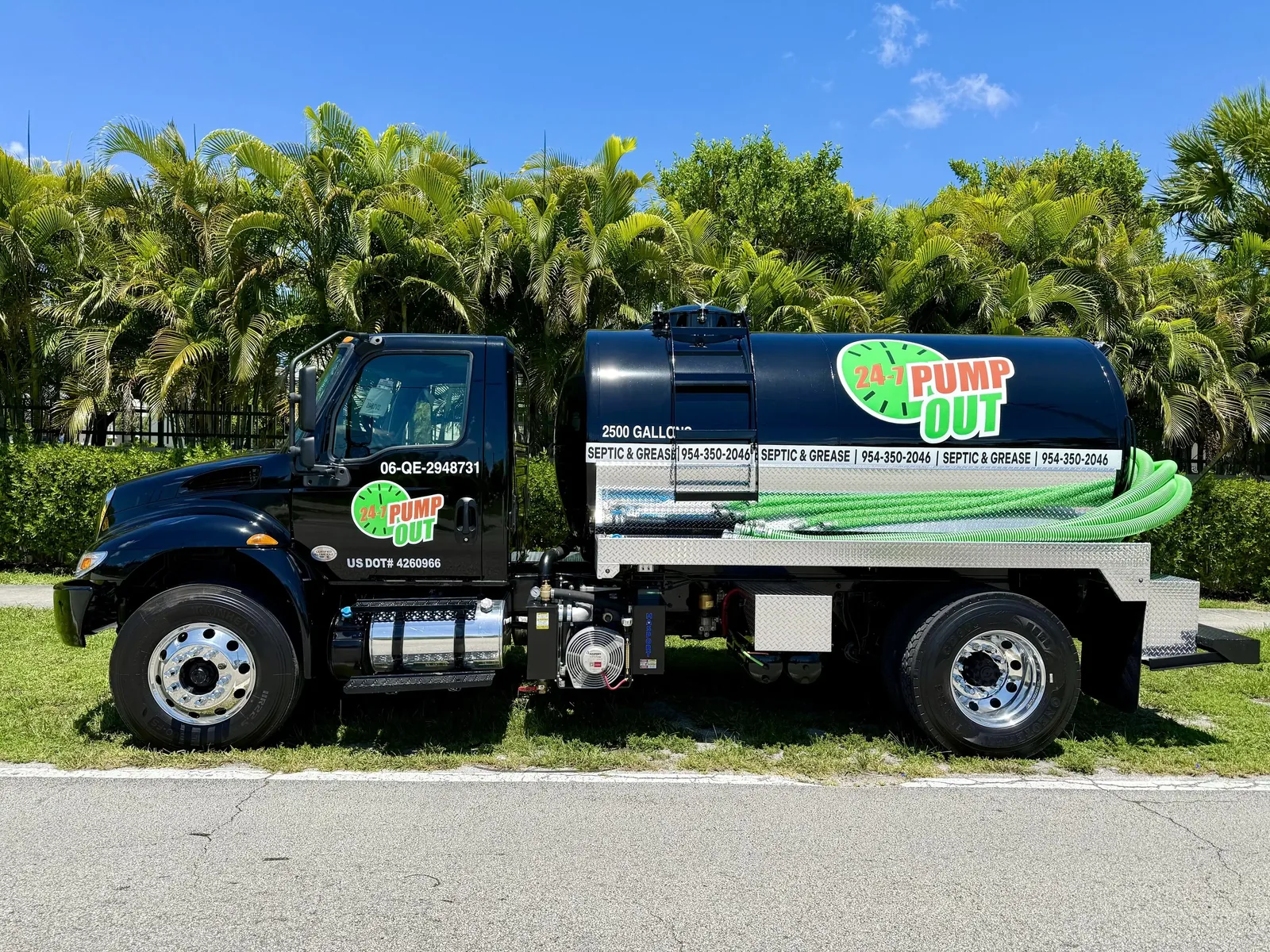
How much does septic tank pumping cost in South Florida?
The big 2026 cost guides agree within a few dollars: HomeAdvisor puts routine septic tank pumping at $292 to $564 with a $428 average, and This Old House at $290 to $560 with about $420. A 1,000-gallon tank typically runs $225 to $400. Buried lids, overdue tanks and after-hours calls push the number up from there.
Those are national market figures. What your own tank costs depends on details a national guide cannot see, which is why our septic tank pumping service quotes every job on the phone, before the truck rolls, for free.
Septic pumping cost table (2026 market ranges)
| What you’re paying for | Typical range | Source |
|---|---|---|
| Routine pump-out, national | $292 to $564 | HomeAdvisor, June 2026 |
| Routine pump-out, second read | $290 to $560 | This Old House, May 2026 |
| 1,000-gallon tank (typical 3-bed home) | $225 to $400 | This Old House and Fixr |
| 1,500-gallon tank | $345 to $600 | This Old House and Fixr |
| Digging to reach a buried lid | adds $50 to $200 | This Old House |
| Overdue tank with hardened sludge | adds $100 to $300 | This Old House |
| Night, weekend or emergency call | adds 50 to 100 percent | This Old House |
| Repairing or replacing a failed system | $5,000 to $15,000 | EPA |
Treat every number as a market range. A quote for your tank needs your tank’s details.
What actually moves the price
Tank size. More gallons means more time on the vacuum and more septage to haul and dispose of. Most single-family homes in Broward, Palm Beach and Miami-Dade run 1,000-gallon tanks; larger homes and small commercial systems run bigger.
How full and how old the sludge is. A tank on a 3-year schedule pumps quickly. A tank that last saw service a decade ago has a compacted bottom layer that has to be broken up before it will leave the tank. Guides price that extra work at $100 to $300, and it is the most common surprise on a first-time call.
Access. If the lid sits under a foot of St. Augustine grass, someone has to find it and dig to it. That is the $50-to-$200 line in the table, and it repeats every visit until a riser lid brings the opening up to ground level. Hose distance matters too: a tank far from where the truck can park takes longer.
When you call. After-hours work costs more across this industry, and in South Florida part of that is set by the county. Broward County’s FY2026 rate sheet charges waste haulers $70 per 1,000 gallons to dispose of septage during business hours and $225 per 1,000 gallons after hours. Miami-Dade requires haulers to carry a county Liquid Waste Transporter permit on top of the state septage license our Florida septic rules guide describes. Disposal is a real cost inside every quote, and it more than triples at night.
What a complete pump-out should include
The cheap way to pump a tank is to take the liquid off the top and leave the sludge, and the tank looks empty until the lid closes. A complete service removes all three layers: the floating scum, the liquid, and the settled sludge that is the whole reason you pump. Ours also includes a pressure wash of the tank and a condition check while it is open, so you hear about a crumbling baffle or a high liquid level while the lid is off, not after the drain field fails.
When you compare quotes, ask the same three questions: does it include the sludge layer, does it include digging if the lid is buried, and does it include disposal. A low number that skips one of those is not the same job.
The cost of putting it off
The EPA’s arithmetic is blunt: maintenance runs $250 to $500 every three to five years, while repairing or replacing a failed conventional system runs $5,000 to $15,000. HomeAdvisor prices drain field replacement alone around $7,000. The tank protects the field, and pumping on schedule is what keeps the field out of the conversation.
South Florida gives that math less slack than most places. Miami-Dade County has identified over 120,000 septic systems in use, and its resilience studies found a large share of residential systems periodically compromised during storms and wet years as groundwater rises. A field that spends the wet season near the water table has no spare capacity for solids from an overfull tank. Our guide to how often to pump a septic tank in Florida shows where your household lands on the schedule.
When it is already backing up
If sewage is coming up a drain tonight, the cost question changes shape: an emergency septic pumping call at 2 a.m. costs more than the same tank on a Tuesday morning, and it is still a fraction of what a flooded floor costs. The warning signs usually show up first; our guide to the signs a septic tank is full covers what to watch for so the Tuesday-morning version is the one you book.
Get a real number for your tank
Tell us the city, what the home or business is, roughly when the tank was last pumped, and whether the lid is exposed. That is enough for a real price and an arrival window on the same call, any hour, across Broward, Palm Beach and Miami-Dade. Call (954) 350-2046 or use the quote form.