
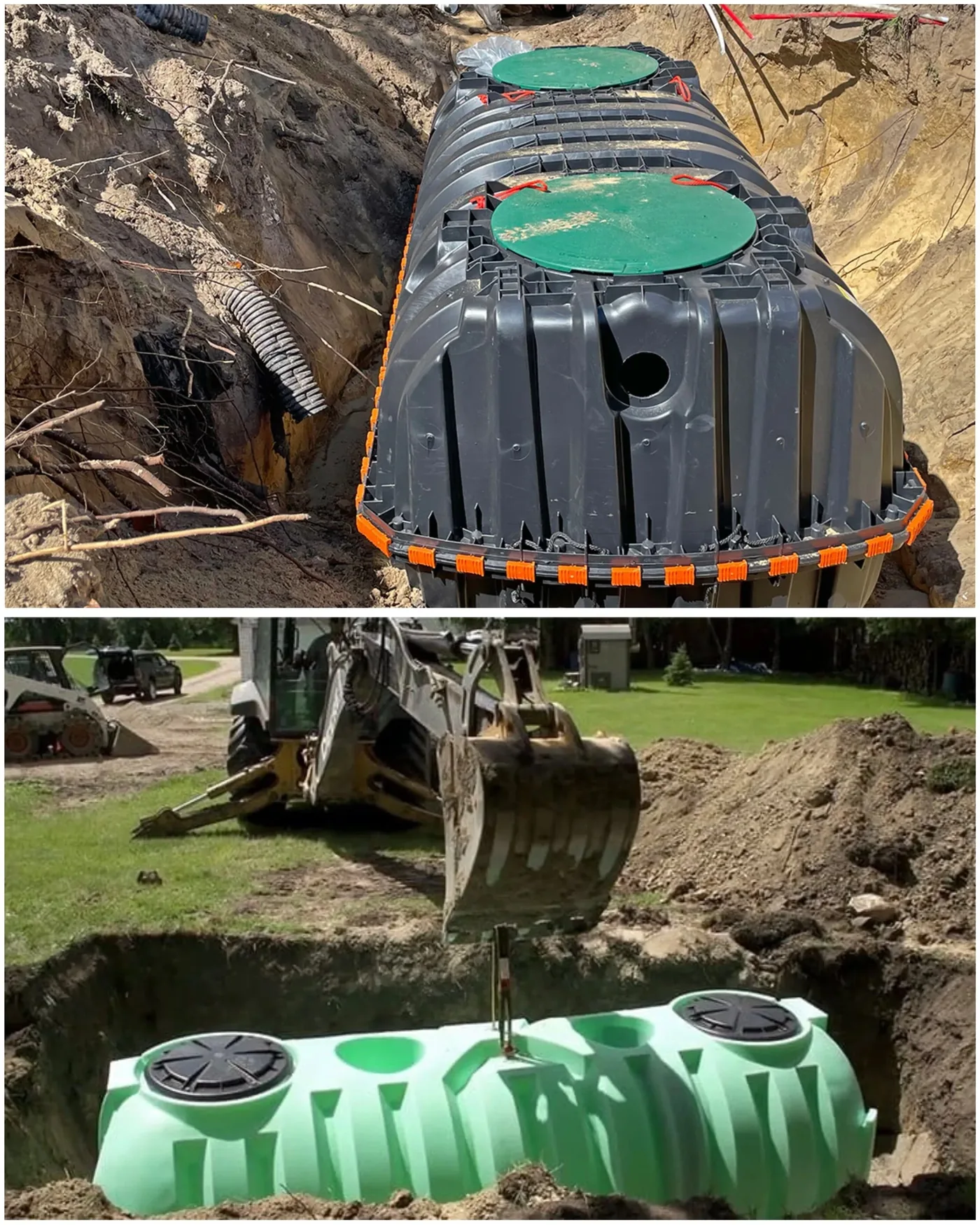
What are Florida’s septic tank rules for Broward and Palm Beach County homeowners?
Septic systems in Florida run under the Department of Environmental Protection’s Chapter 62-6 rules, and in Broward and Palm Beach the county health department office issues the permits. You need a permit to install, repair, modify or abandon a system. Routine pumping needs no homeowner permit, though the hauler must be licensed. And since July 1, 2023, many small lots need nitrogen-reducing systems.
That is the short version. The rest of this guide covers who to call, the setback numbers, what the 2023 law changed, and what happens when sewer reaches your street. If a rule points at real work on your system, our septic tank installation crew deals with these permits for a living.
Who actually runs the septic program now
Florida moved its septic program (formally, onsite sewage treatment and disposal systems) from the Department of Health to the Department of Environmental Protection on July 1, 2021 under the Clean Waterways Act. The day-to-day did not move: in Broward, Palm Beach and Miami-Dade, the county health department offices still take the applications, review the site plans and do the inspections.
So the office you call is local. The Florida Department of Health in Broward County runs septic permitting at 954-412-7334. In Palm Beach County it is 561-840-4500, and that office signs off on septic and well plans before a building permit issues and records the final inspection before a certificate of occupancy. Statewide, about 2.6 million septic systems serve roughly 30 percent of Florida.
When you need a permit, and when you do not
Florida Statute 381.0065 is blunt: no person may construct, repair, modify, abandon or operate a septic system without a permit. Rule 62-6.003 adds that all repairs require a construction permit, which stays valid 90 days and is meant to be issued within about 2 working days, while a new-system construction permit runs 18 months.
The everyday exception matters just as much: the rules say removing a tank’s contents without disturbing the drain field is not a repair. Routine pumping needs no homeowner permit. The company pumping it, though, must hold an annual operating permit as a septage hauler in its county, with a permitted disposal method for everything it carries away.
| Permit or rule | The number that matters |
|---|---|
| New system construction permit | Valid 18 months |
| Repair permit | Valid 90 days; issued in about 2 working days |
| Routine pump-out | No homeowner permit; hauler must be licensed |
| Abandonment after sewer connection | Within 90 days, under permit |
| State fee caps | $25 to $125 per permit or inspection, site evaluation $40 to $115 |
| Broward new-system fees | $100 plan review, $260 permit with two inspections, $165 county site evaluation |
Fee totals vary by county; the Broward figures come from the DOH-Broward application packet.
The setback and sizing numbers
Rule 62-6.005 sets where a system may sit: 75 feet from a private drinking water well, 100 feet from a small public well, 75 feet from surface water, at least 5 feet from buildings and property lines, and never under a structure. Rule 62-6.006 requires 24 inches between the bottom of the drain field and the wet-season water table, which is the rule South Florida’s high groundwater pushes against. Tank sizing starts at 900 gallons of effective capacity for a typical home’s flow.
Broward County layers its own code on top: new drain fields must sit above the 10-year flood elevation, and premises abutting a sewer main must connect within 180 days, after which installing or repairing septic there is unlawful.
The 2023 nitrogen rule (HB 1379)
Since July 1, 2023, a new septic system on a lot of one acre or less inside a Basin Management Action Plan or Alternative Restoration Plan area cannot be a conventional tank and drain field. It must be an enhanced nitrogen-reducing system that cuts nitrogen by at least 65 percent, and the usual variance process does not apply.
Where does that bite in the tri-county? FDEP’s BMAP list names no Broward waterbody, while the Lake Okeechobee plan reaches the western Glades communities of Palm Beach County. The honest answer for any specific lot is FDEP’s own parcel map (search “BMAPs-ARP-OSTDS”), because impacted areas exist in all three counties. If a replacement or new install is in your future, this is the first thing worth checking, since nitrogen-reducing systems cost more and are sized differently. Our drain field installation work runs through exactly this review.
Who is allowed to do the work
Septic construction, repair and maintenance contracting is registered work under Chapter 489: a registered septic tank contractor, or a licensed plumbing contractor, with exams and a minimum three years of experience behind the registration. Doing that work without registration is a first-degree misdemeanor.
One carve-out exists: an owner who personally works on the system serving their own owner-occupied single-family home is exempt from registration, but not from permits. The application, the site evaluation and the inspections all still apply.
Two things Florida does NOT require are worth naming. There is no statewide periodic inspection program for existing systems; the 2010 mandate was repealed in 2012, and today’s statute lets counties adopt voluntary evaluation programs while barring any point-of-sale inspection mandate. Buyers order septic inspections anyway, by choice, because the drain field is invisible and expensive. The difference between “required” and “smart” is the whole story there.
When sewer reaches your street
Sewer availability starts a clock. Under Florida Statute 381.00655, the owner of a working septic system must connect within 365 days of written notice that sewer is available at the property. Broward’s county code is stricter at 180 days. Cities push this along: Boca Raton’s conversion program has the city over 99.5 percent on sewer, and Pompano Beach reports only a few locations still on tanks.
Connecting is not the end of the septic system’s paperwork. The old tank must be formally abandoned within 90 days under its own permit: pumped out by a licensed hauler, the bottom ruptured or the tank removed, and the hole filled with clean sand. In Broward the abandonment permit runs $50 and wants the pump-out receipt attached. We handle the pump-out and can coordinate the abandonment steps with your contractor.
What this means in practice
For most Broward and Palm Beach septic owners the rulebook touches you three ways: keep the tank pumped on schedule (no permit needed; see what pumping costs and how often Florida tanks need it), permit any real repair or replacement through the county health department, and know your lot’s status before planning a new system. For the permit-grade work, call (954) 350-2046. We are licensed septic tank and drain field installation specialists, we work these county offices year-round, and the quote is free.