
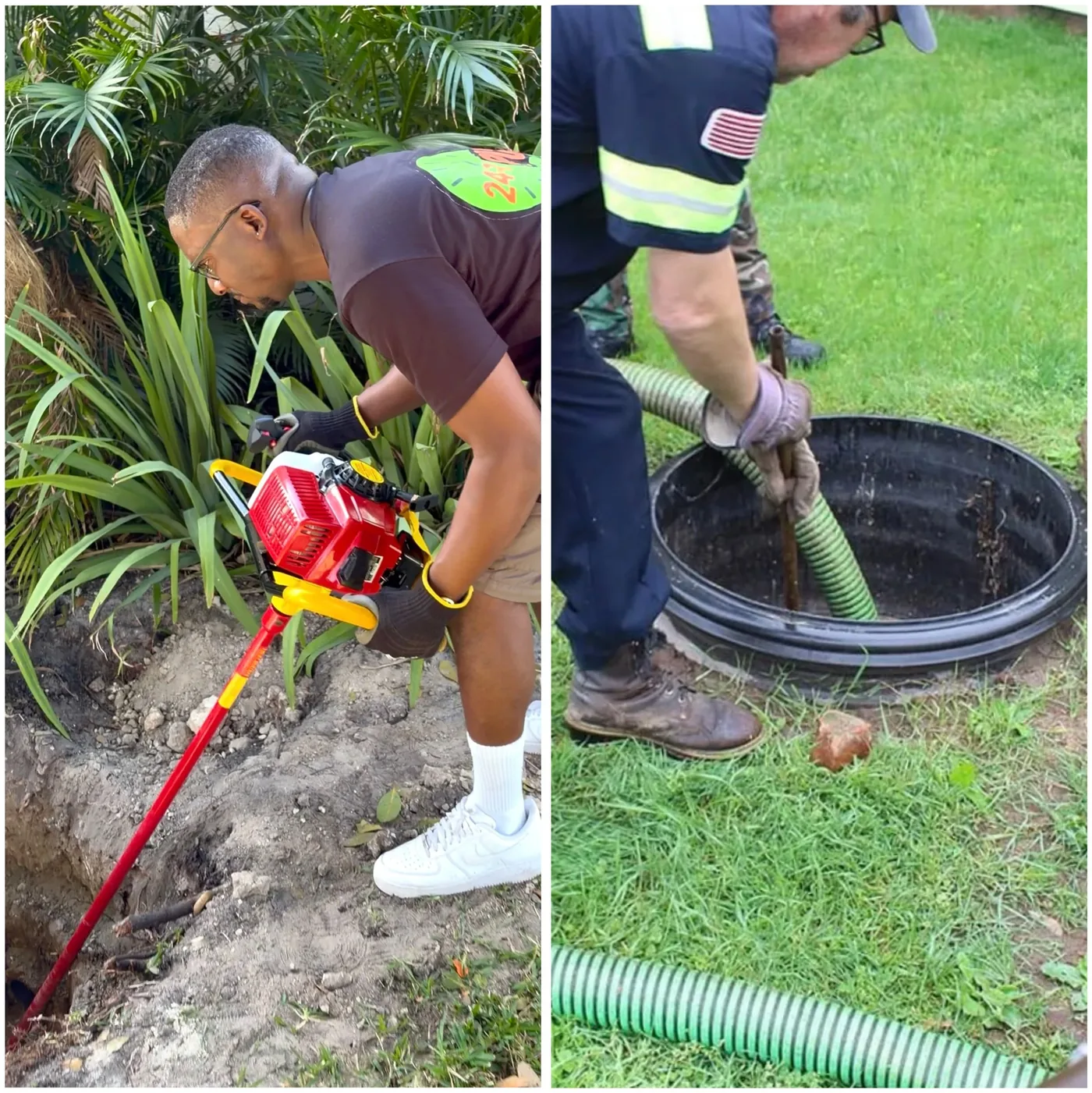
Septic Tank Pumping
Complete septic tank pump-outs for homes, businesses and restaurants — sludge and scum out, not just the liquid off the top.
View Details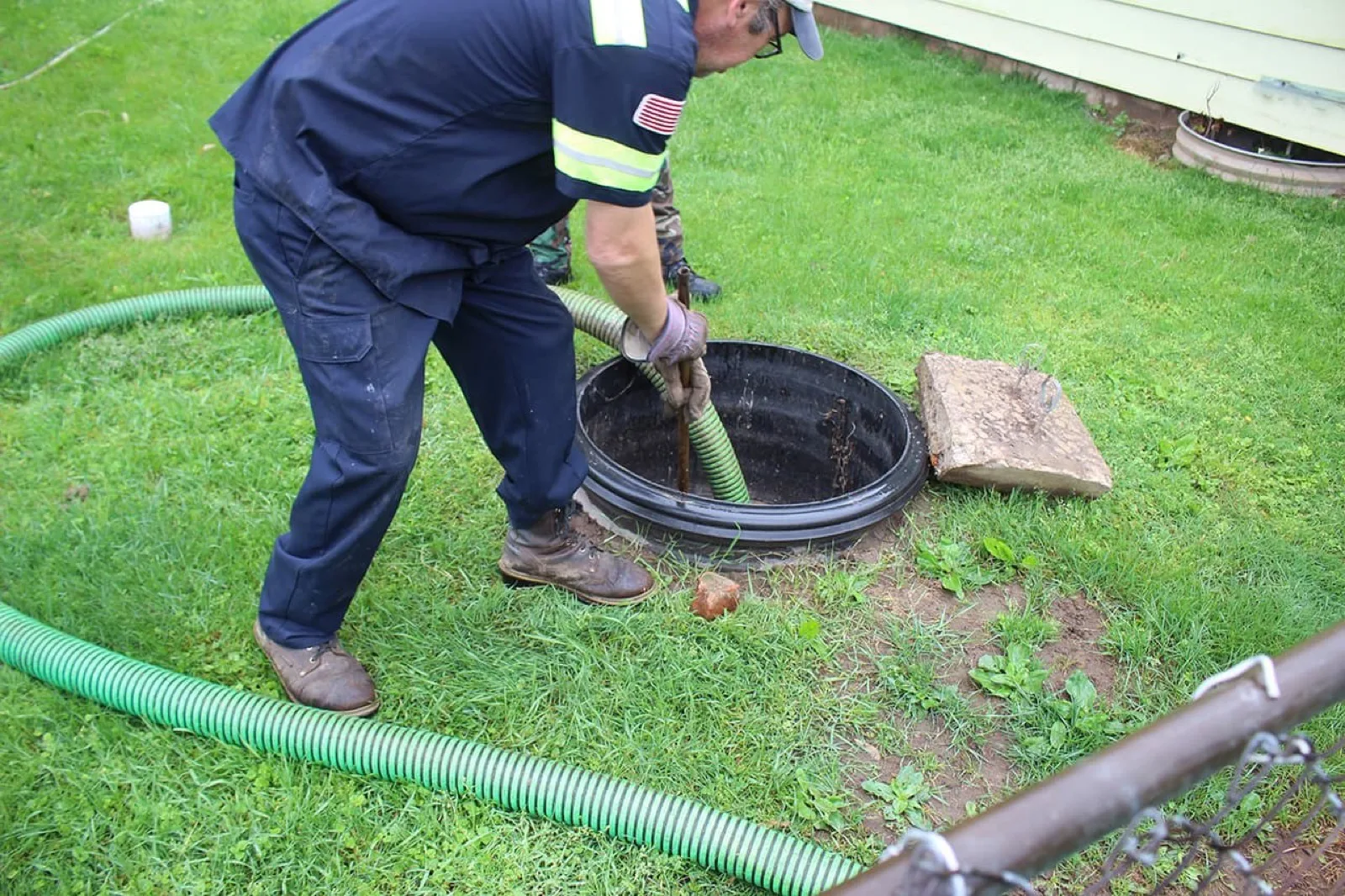
A septic tank inspection shows the true condition of the system before you buy, sell or build. We open the tank and check the lids, the inlet and outlet baffles, and the liquid level at the outlet. If the tank is due, we pump it during the visit and check the walls and floor. Then we look at the drain field for wet spots, odors and standing water. Everything goes into a written maintenance report. You can hand it to a buyer, a title company or the county health department office. We cover Broward, Palm Beach and Miami-Dade 24 hours a day, 7 days a week.
A standard home inspection stops at the house. Florida's home inspector rules do not require the inspector to check the septic system at all. That is why buyers order a separate septic inspection during their inspection period. If the tank is overdue, our septic tank pumping service runs in the same visit. One Google review says it plainly: "I recently hired 24-7 Pump Out for a septic tank inspection and pumping service, and I'm extremely impressed with their professionalism, timeliness, and quality." We are based in Pembroke Pines and give you a real arrival window on the phone. Quotes are free, with no obligation.
Tell us what the system needs — we answer fast, any hour.
We start by finding the tank and getting the lids open. On older homes that can mean digging, since the lids are often buried. Once the tank is open, we check each lid for cracks and gaps. Then we look at the inlet and outlet baffles. Baffles keep solids in the tank and out of the drain field. On older concrete tanks they are often crumbling or gone. Next we read the liquid level against the outlet pipe. A level above the outlet points to a drain field that is not taking water. A level below it points to a leaking tank.
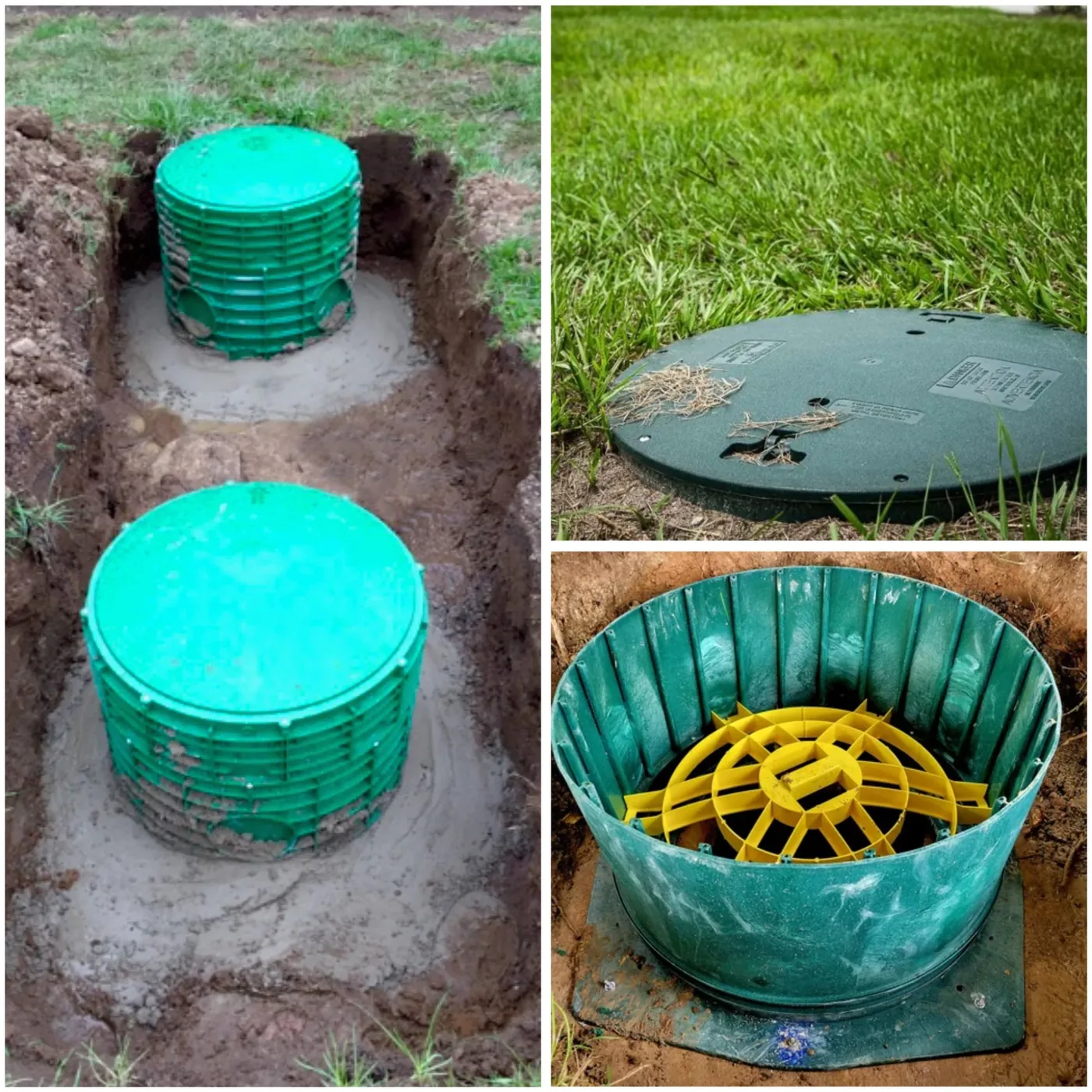
We measure the sludge on the bottom and the scum floating on top. The EPA says to pump when sludge is within 12 inches of the outlet or scum within 6 inches. If the tank is past that point, we pump it during the inspection. Then we check the walls and floor while the tank is empty. Last, we check the drain field. Soggy ground, a sewage smell, standing water, or grass greener over the field than around it all get noted. If you want ground-level access next time, we also install septic riser lids.
Florida has no law that requires a septic inspection when a house is sold. The state passed a five-year inspection rule in 2010 and repealed it in 2012 before it took effect. So the inspection is a choice, and buyers make it because the drain field is invisible from the surface. A field that struggled last wet season can look like any other lawn in January. Some lenders ask for one. Appraisers on FHA and VA loans can call for a full inspection when they see trouble. Most buyers order it inside the inspection period, so a bad drain field becomes a repair credit before closing.
Sellers use the report the other way around. A report showing a sound tank and a dry drain field answers the question before a buyer asks it. If it turns up a problem, the seller can fix it on their own schedule. Permits are another use. Add a bedroom, and the county health department office may ask for an evaluation of the existing system. A current report with the tank pumped and checked gives that review a solid starting point. For a home you already own, the EPA recommends a professional inspection at least every three years.
South Florida lots are flat and sandy, and many drain to canals. In the May to October wet season the water table rises. In low-lying areas it sits just a few feet below the surface. A drain field only works while the soil under it stays unsaturated. Florida rules call for 24 inches between the bottom of the drain field and the wet season high water table. Older systems were built to a 12-inch rule, so many sit closer to the water than that. Miami-Dade County counts about 105,000 parcels on septic. Its 2018 study put about 56 percent of residential systems at risk in storms or wet years.
That is why the season matters when we read a tank. A high liquid level in August can mean the ground is saturated rather than the field is worn out. The report records what the liquid level was and what it points to. Older neighborhoods and unincorporated pockets in all three counties still run on septic. If the drain field has failed, replacing it takes a permit through the county health department office. Our drain field installation service handles that work when the report calls for it.
Free, no-obligation estimates across Broward, Palm Beach & Miami-Dade.
(954) 350-2046From the first call to the closed lid, here is exactly how it goes.
Tell us what's going on — routine pump-out, backed-up drains, a trap that missed its schedule. Day or night, the phone gets answered by the team that does the work, not a machine that promises a callback.
Standard jobs get priced right on the phone; bigger work gets a free look first. Either way you hear the number and an honest arrival window before the truck moves — and both hold.
The truck shows up inside the window and the work gets done completely — tank emptied to the floor, trap fully pumped, install built to code. No skimmed tanks, no shortcuts under the lid.
Before we button up, you hear what we saw: the system's real condition, when to service it next, and anything worth watching. Honest reads only — we'd rather earn the next call than invent this one.
Common questions about septic inspections across Broward, Palm Beach & Miami-Dade. Don't see yours? Give us a call — we're happy to help.
Complete septic tank pump-outs for homes, businesses and restaurants — sludge and scum out, not just the liquid off the top.
View Details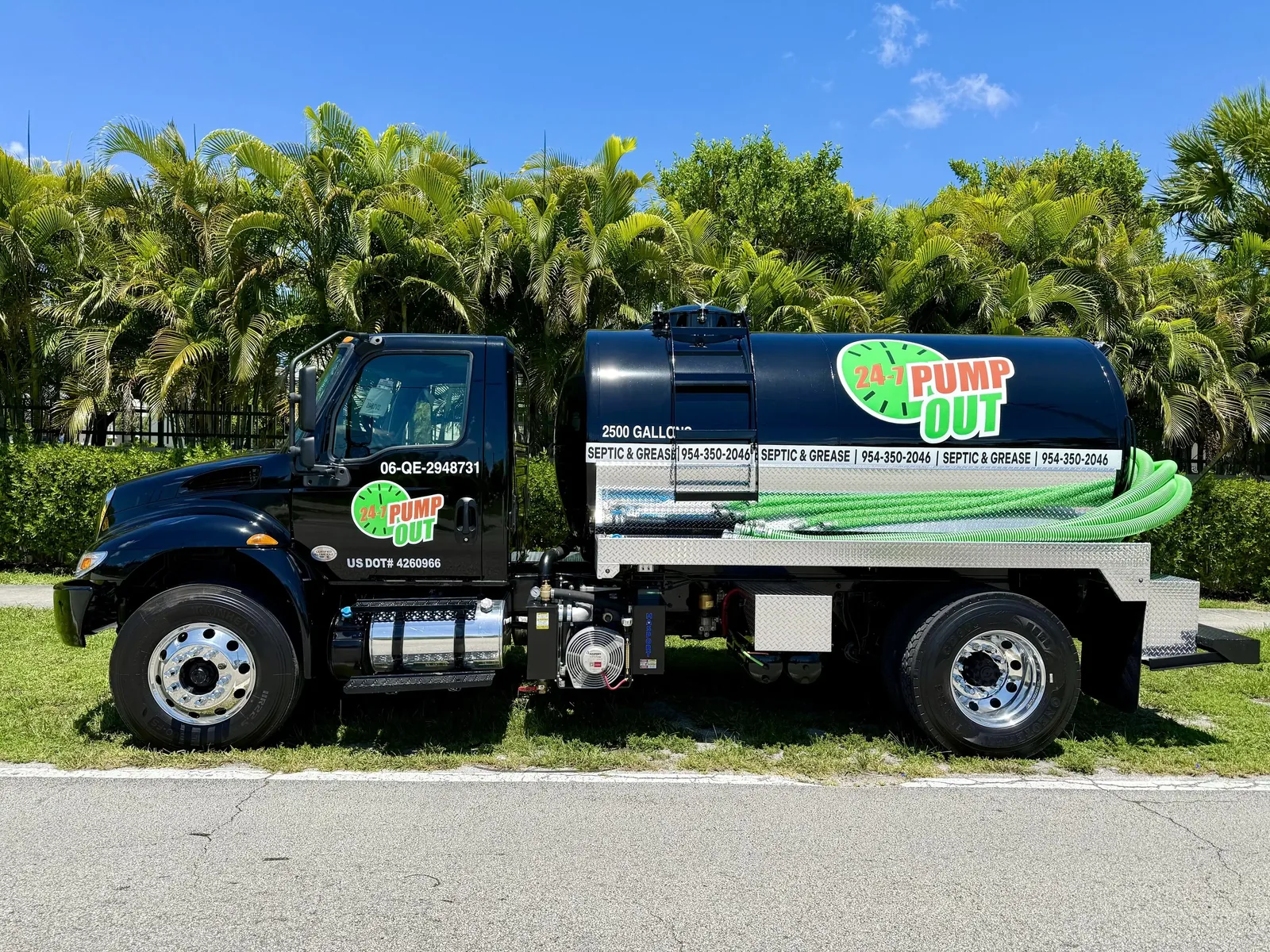
Sewage backing up, tank overflowing, alarm going off — we answer around the clock, nights, weekends and holidays.
View Details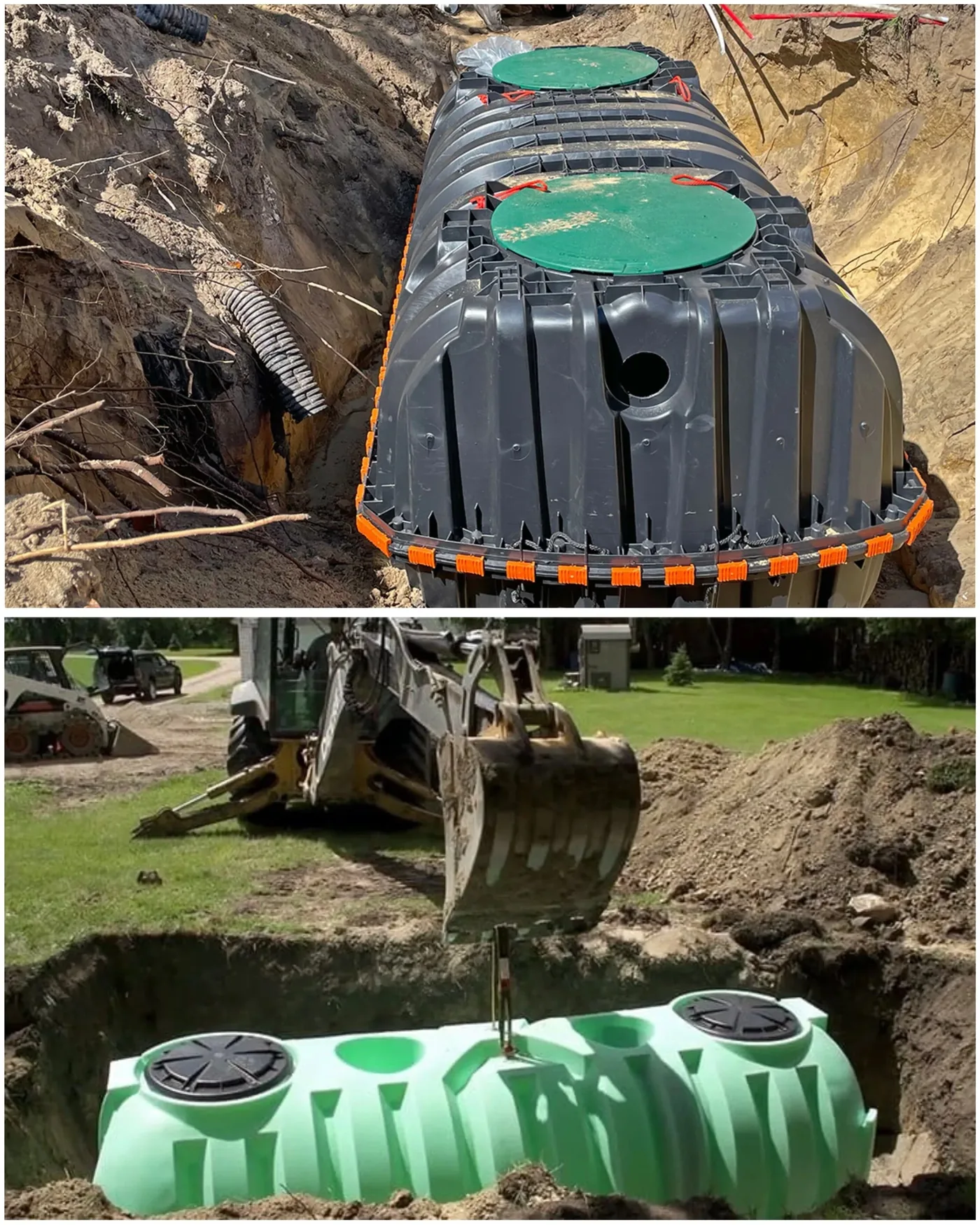
New septic tanks and full replacements — excavation, placement and connection handled to county code by a licensed installer.
View Details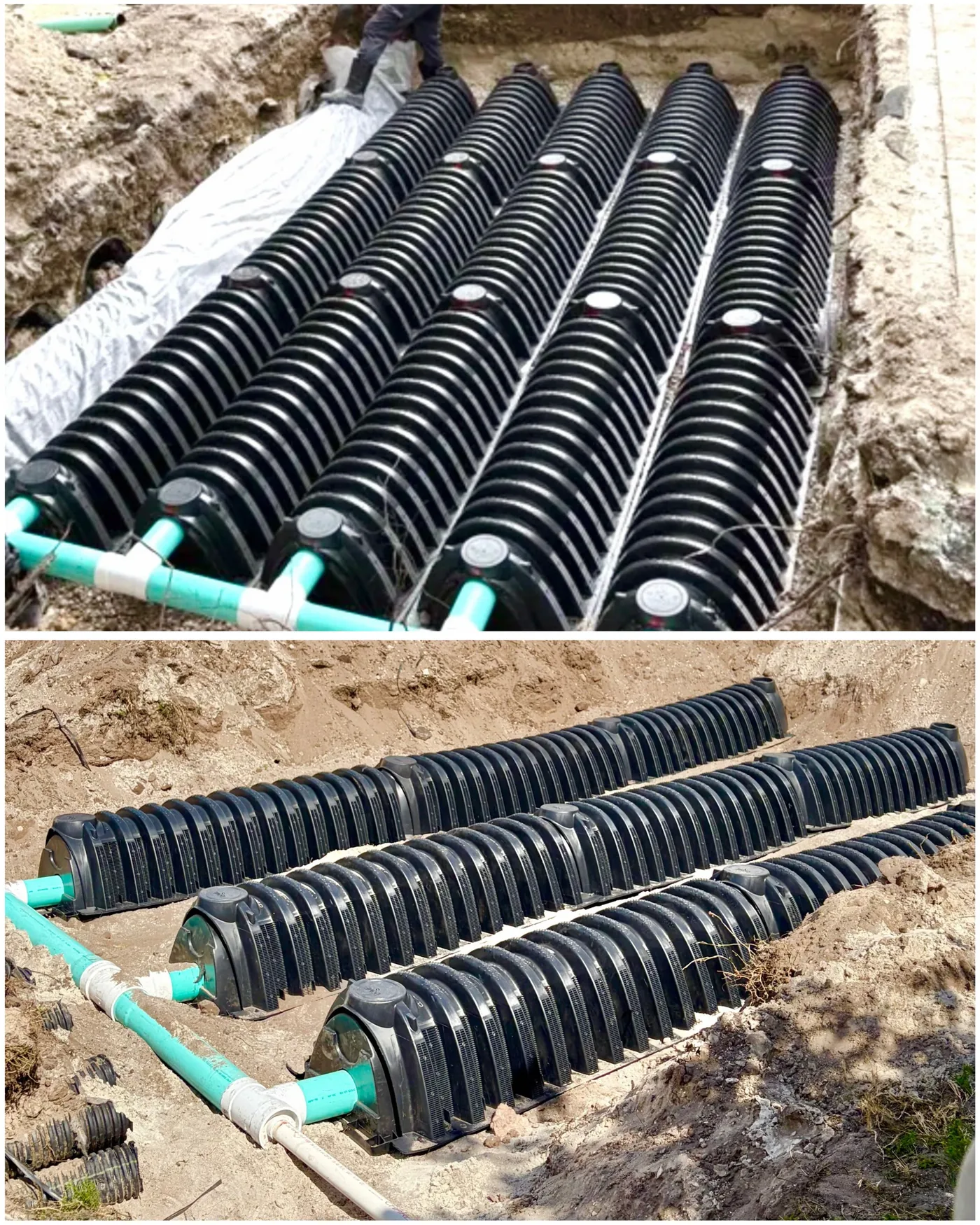
Durable, code-compliant drain fields installed and replaced — sized and built for South Florida's high water table.
View Details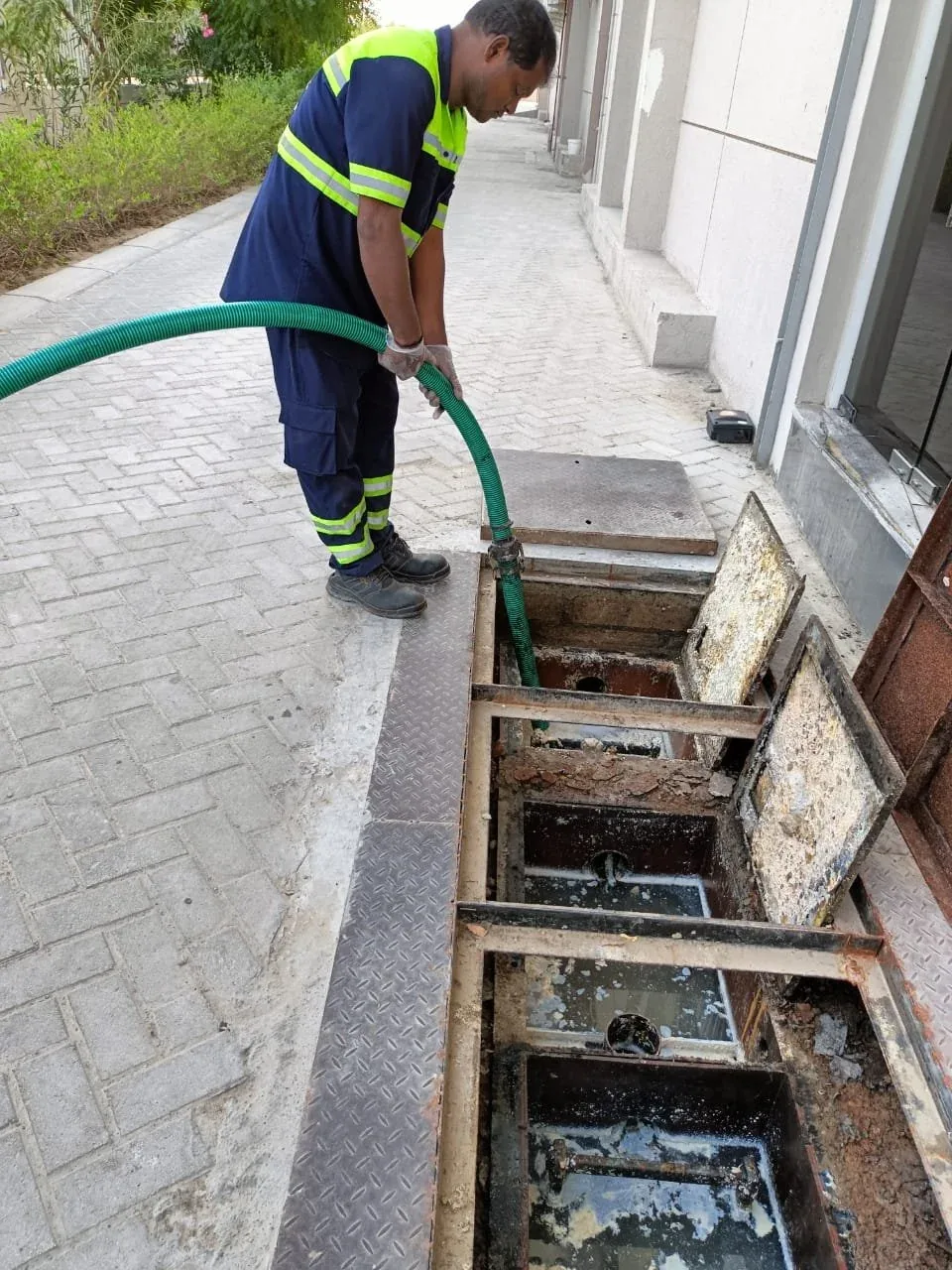
Recurring grease trap pumping for restaurants, kitchens and food service — the schedule that prevents backups and fines.
View Details Riser lids bring your septic access up to ground level — every future pump-out gets faster, cleaner and easier.
View DetailsThe name is the promise: nights, weekends and holidays, the phone gets picked up and the truck rolls. Septic emergencies do not keep business hours, so neither do we.
No dispatch runaround and no random crews. The same trusted team handles your job from the first call through completion.
You hear the price before the truck moves — on the phone for standard pump-outs, after a free look for installs. The number you hear is the number you pay.
Licensed septic tank and drain field installation specialist — so pumping, diagnosis, and the big fixes all come from one company that understands the whole system.
Who permits septic work in Broward and Palm Beach, when you need one, the setback numbers, and how the 2023 nitrogen-reducing rule changes new installs.
Read moreFlorida homes should pump the septic tank every 3 to 5 years. See the schedule by household size and why South Florida tanks run on the shorter end.
Read moreA pump-out that's overdue, a backup that can't wait, a grease trap that needs a real schedule — call any hour or send the form, and you'll get a straight price and a real arrival window from the team that does the work.
Tell us what the system needs — we answer fast, any hour.