
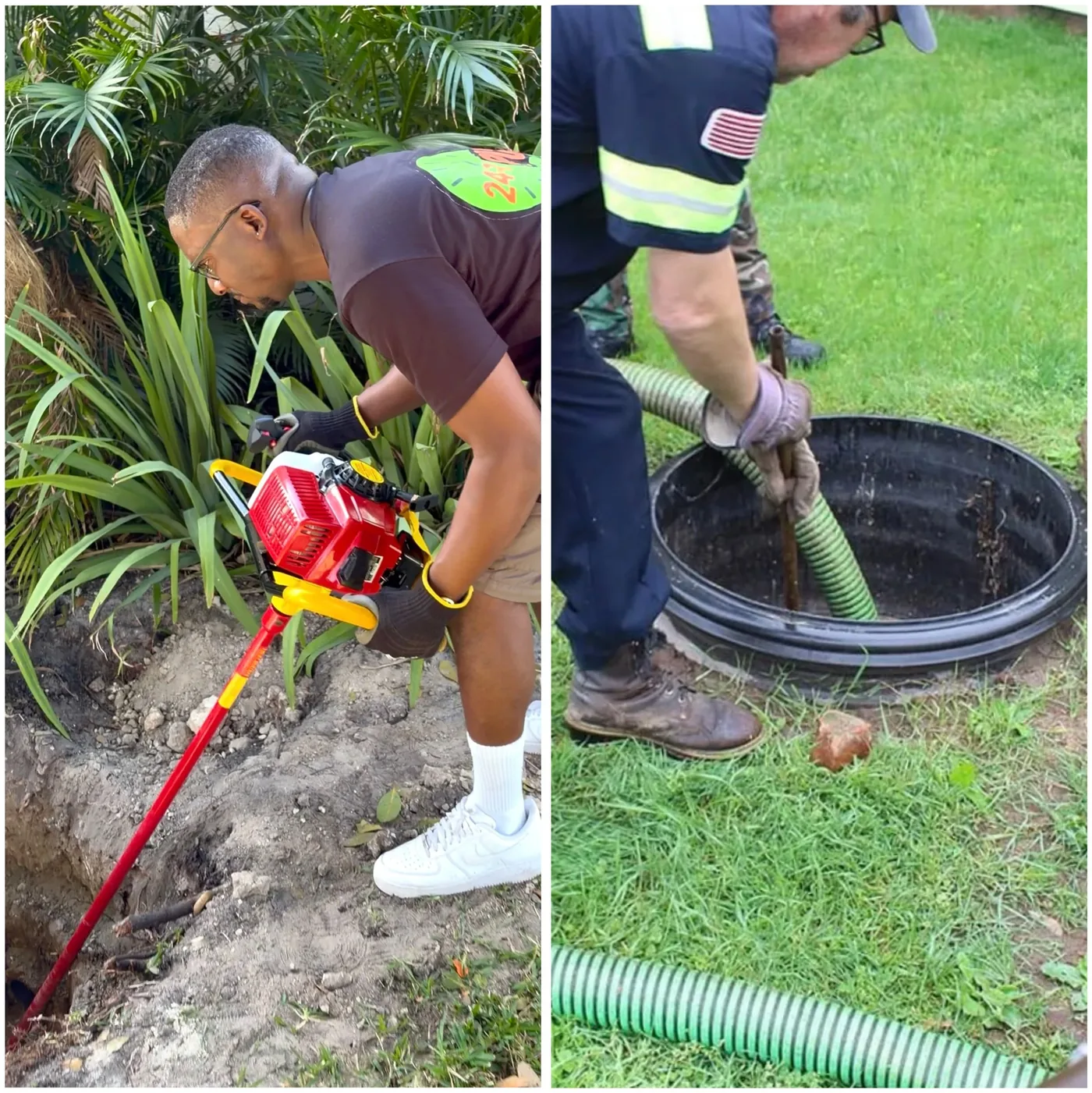
How often should you pump your septic tank in Florida?
Most Florida homes should have the septic tank pumped every 3 to 5 years and looked at by a professional at least every 3 years. That is the standard from the EPA and the Florida DEP septic owner’s guide. Bigger households, smaller tanks, garbage disposals and South Florida’s high water table all push you toward the shorter end.
If you cannot remember your last pump-out, that usually is the answer. Our septic tank pumping service covers the whole tri-county, and the crew records the sludge level at every visit so your next interval is a measurement instead of a guess.
What the official guidelines actually say
The EPA’s SepticSmart program says the average household tank gets pumped every three to five years, with a professional inspection at least every three. The Florida DEP owner’s guide gives the same 3-to-5-year range and adds one Florida-specific rule: use a state-licensed septage disposal service, because the waste has to be hauled and disposed of legally.
Four things set your real interval, per the EPA: how many people live in the house, how much wastewater they produce, how much of it is solids, and the size of the tank. Systems with pumps, floats or other mechanical parts need a look every year.
There is one number worth memorizing. A tank needs pumping when sludge and scum take up more than a quarter of the liquid depth. A good pumper measures those layers and writes them down, which is how “every few years” turns into a real schedule for your specific house.
Pumping schedule by household size
Ohio State University Extension publishes the table most of the industry works from. Here it is for the two most common tank sizes:
| People in the home | 1,000-gallon tank | 1,500-gallon tank |
|---|---|---|
| 1 | about every 12 years | longer still |
| 2 | about every 6 years | about every 9 years |
| 3 | about every 3.7 years | about every 5.9 years |
| 4 | about every 2.6 years | about every 4.2 years |
| 5 | about every 2 years | about every 3.3 years |
| 6 | about every 1.5 years | about every 2.6 years |
North Carolina State’s table, adapted from the same research, lands on the same numbers: a family of four on a 1,000-gallon tank is a roughly 3-year cycle, not a 5-year one. Penn State goes further for big households, recommending every 2 to 3 years because a family of four fills a typical tank’s solids storage in about a year and a half.
The pattern is simple. The 5-year end of the range belongs to one or two quiet water users on a properly sized tank. A busy family home should plan on 2 to 3 years.
Why South Florida tanks run on the shorter end
Florida has an estimated 2.6 million septic systems serving about 30 percent of the state, and the ground they sit in is different from almost anywhere else. The water table under Broward, Palm Beach and Miami-Dade sits close to the surface, and it rises through the wet season. State standards require about 24 inches of unsaturated soil beneath the drain field, and in a soggy year that margin shrinks.
A drain field with less dry soil under it has less room for error. When a neglected tank starts passing solids, a South Florida field clogs faster than the same field would up north. In Miami-Dade the stakes are higher still: the Biscayne Aquifer, the county’s drinking water source, sits only a few feet down, and the county now requires septic haulers to carry a Liquid Waste Transporters permit.
Sandy soil moves water fast, wet season runs May to October, and hurricane rain can saturate a yard for weeks. None of that changes the calendar directly. It just means a Florida tank that is due has less slack than the national guidance implies.
What shortens the interval
A garbage disposal is the big one. NC State found disposals roughly double the solids entering the tank, and the Florida DEP guide says to skip the disposal or have the tank checked more often if you use one. Scrape plates into the trash instead.
Water volume matters too. Indoor use runs close to 70 gallons per person per day, and one leaking toilet can waste 200 gallons a day on its own, all of it through the tank. Full laundry loads spread across the week, fixed leaks and efficient fixtures all buy you time. Water softener backwash and hot tub water should stay out of the system entirely.
What waiting too long costs
The tank protects the drain field. Skip pumping and the sludge layer rises until solids ride out into the field, and the field is the expensive half of the system. The EPA’s math: a few hundred dollars of maintenance every few years, against $5,000 to $15,000 to repair or replace a failed conventional system.
The warning signs are hard to miss once they start: slow drains through the whole house, gurgling, sewage odor in the yard, bright green spongy grass over the field, or standing water around the tank. Our guide to the signs your septic tank is full walks through each one. If sewage is already backing up indoors, skip the reading and call emergency septic pumping; that line answers at any hour.
One Florida-specific warning: never pump a flooded tank
After a tropical storm or a heavy wet-season stretch, the instinct is to pump. Florida health officials say the opposite: while the ground is saturated, do not have the tank pumped. An empty tank in waterlogged soil can float or crush, and if the real problem is high groundwater, pumping solves nothing. The EPA adds that mud and silt can enter a pumped tank during a flood.
Cut water use, spread out laundry, and wait for the yard to drain. Once the soil dries, then pump and have the system looked over for damage. A septic inspection with a written report is the clean way to know what a storm actually did, and any repair it turns up runs through the county permit process our Florida septic rules guide explains.
Put your tank on a schedule
Work out where your house sits on the table above, then let the measurements take over. When our crew pumps a tank, we check its condition with the lid off and tell you what we saw, so the next call is planned instead of an emergency. One truck covers Broward, Palm Beach and Miami-Dade, day and night. Call (954) 350-2046 or send the quote form and we will get you on the calendar.