
How much does a septic tank riser cost in Florida?
Angi’s July 2026 guide puts one installed septic tank riser at $200 to $400. Fixr, January 2025, prices plastic at $300 to $400 and concrete at $350 to $600. The Septic Guide, October 2026, lists a riser at $100 to $400, paid once. By the same guide, digging up a buried lid runs $50 to $250 at every visit.
Those are national market figures. What your tank needs depends on how many openings get a riser and how deep the lid sits. Our septic riser lid installation service quotes every job for free. The riser usually goes on at the end of a septic tank pumping visit, while the tank is open.
What does a septic tank riser cost installed?
Across four guides, one installed riser runs $100 to $600. Angi puts it at $200 to $400, and HomeAdvisor’s 2025 data at $300 to $600. Fixr splits it by material, with concrete at the top of its range. The Septic Guide sets the low end at $100. A second opening means a second riser.
| What you are paying for | Typical range | Source |
|---|---|---|
| One riser, installed | $200 to $400 | Angi, July 2026 |
| One riser, one-time cost | $100 to $400 | The Septic Guide, October 2026 |
| Plastic riser, installed | $300 to $400 | Fixr, January 2025 |
| Concrete riser, installed | $350 to $600 | Fixr, January 2025 |
| Septic tank riser, as an added cost | $300 to $600 | HomeAdvisor, 2025 data |
| Two openings, two risers | $400 to $800 | Angi, July 2026 (double one riser) |
| Digging to a buried lid, every visit | $50 to $250 | The Septic Guide, October 2026 |
| Septic tank lid replacement | $150 to $500 | Fixr, January 2025 |
Treat every line as a market range. Angi says riser cost does not change with the size of the tank.
What is a septic tank riser?
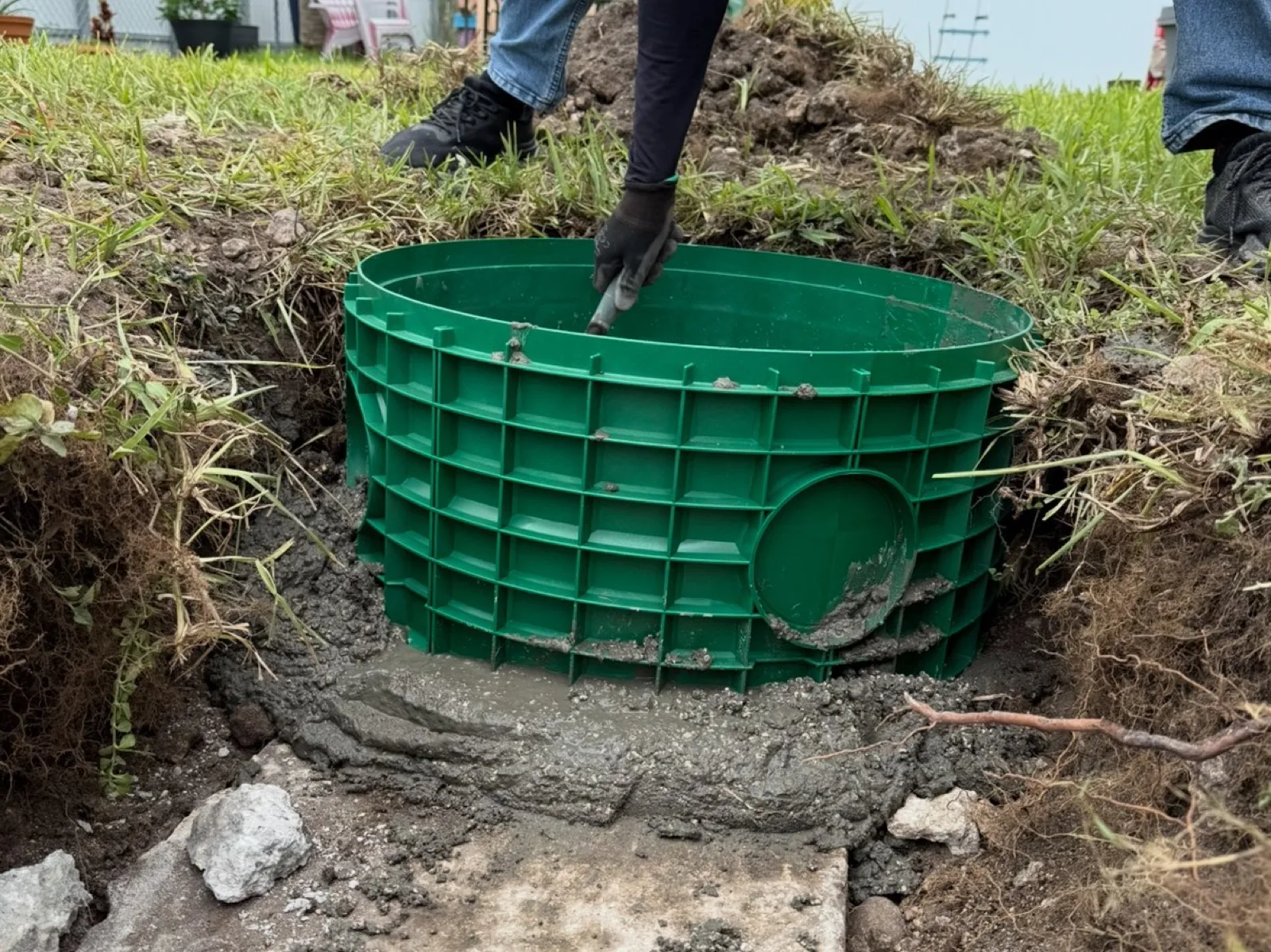
A riser is the pipe that brings a buried tank opening up to the lawn. Florida’s Rule 62-6.013 calls it “a pipe or conduit surrounding an access manhole.” It gives access to the inside of the tank. The rule says a riser access lid or manhole cover closes it, and the riser must be watertight.
Angi describes it as a plastic or concrete pipe running from the tank to the surface of the lawn. Without one, Angi notes, the septic company has to dig every time the tank needs pumping or service. Covering the hole back up takes time and money too.
Dedra wrote in a Google review: “They installed a new septic riser and lid on my septic tank, and the entire experience was excellent from start to finish.”
How much does it cost to replace a septic tank lid?
Fixr’s January 2025 guide puts a septic tank lid replacement at $150 to $500. Fixr calls it one of the cheaper repair jobs on a septic system. Lids can be damaged by exposure to dirt and the elements. The new lid should be the same size as the old one, Fixr says.
Fixr also notes that some experts recommend replacing concrete lids with plastic models. A worn lid surface may let debris into the tank.
Florida’s definitions rule, 62-6.002, has a line just for lids. It says “replacement of a broken lid to any tank shall not be considered a repair.” If the old lid sits under the grass, a lid job is a good time to add a riser. Our septic tank repair cost guide for Florida covers the other tank-side repairs.
Is a septic riser worth it?
For a lid buried under the lawn, the guides say yes. Angi says a riser pays for itself. The Septic Guide puts a riser at $100 to $400 once and the dig at $50 to $250 per visit. It says risers pay for themselves if you stay in the home more than 2 to 3 years.
Run the middle of both ranges. A $250 riser against a $150 dig is paid off by the second visit. The best case pays back the first time, since one $250 dig costs more than a $100 riser. The slowest case, a $400 riser against $50 digs, takes eight visits.
The dig comes back on the pumping schedule. Angi says septic system manufacturers recommend pumping every three to five years. Our guide to how often to pump a septic tank in Florida shows where your household lands. What septic tank pumping costs in South Florida covers the rest of that bill.
Dee M wrote in a Google review: “They installed a riser on my septic tank so now access is simple and no more digging every time it needs service.”
What does Florida’s rule say about riser lids and tank access?
Rule 62-6.013 is Florida’s construction standard for tanks. Its title says so: “Construction Materials and Standards for Tanks.” Built to it, a tank’s access over the inlet and outlet must reach within 8 inches of finished grade. Each compartment needs a manhole of at least 225 square inches. The rule was last amended in June 2026.
The riser seal has its own sentence. If the riser lid opens straight into the tank, the joints around the riser and tank must be sealed watertight. The rule gives the reason: “to prohibit intrusion of ground water into the tank.”
The lid has rules too. Access manholes must be made vandal, tamper and child resistant. The rule accepts one or more of four methods, as specified by the manufacturer:
- A padlock
- A twist lock cover that needs special tools to remove
- A cover weighing 58 pounds or more, net weight
- A hinge and hasp with stainless steel or other corrosion resistant fasteners, for fiberglass, metal or plastic lids
The rule names risers outright for pump tanks. When the top of a pump tank sits more than 8 inches below finished grade, risers must be used.
Why do riser seals matter in South Florida?
Groundwater sits close here. Miami-Dade County says South Florida groundwater is just a few feet beneath the surface. It is closest at the end of the wet season, around September and October. That is the water Florida’s rule keeps out of the tank when it calls for sealed, watertight riser joints.
Miami-Dade County alone has identified approximately 120,000 septic systems in use. On every one with a buried lid, the lid has to be found and dug up before each pump-out.
Even an inspection starts by opening the tank. The Septic Guide notes that takes accessible risers or digging to the lid. Our septic inspection checks the lids along with the tank and baffles, and puts it in writing. See what a septic inspection costs in Florida for that visit.
Septic permits in Palm Beach and Broward run through the county health offices. In Palm Beach County, the Florida Department of Health office regulates and permits septic systems. In Broward, the county office still handles septic tank permitting and inspection.
What changes the number?
A riser price follows the tank in front of you. The guides price risers one at a time, so each opening adds one. Material moves the price within the range, and a buried lid adds the dig. No guide we read prices depth or the lock on its own. Angi says tank size does not change the price.
- Openings. Angi says you pay double for two risers. Florida’s rule wants access to both the inlet and outlet devices.
- Material. Fixr prices plastic at $300 to $400 and concrete at $350 to $600, installed. Angi says concrete costs more to install because of its weight and the equipment it needs.
- The dig. At the end of a pump-out, the lid is already dug out and open. That is when our septic tank riser installation usually happens.
- Depth. A riser runs from the tank to the surface, so a deeper lid takes more riser.
- The lock. Florida’s rule accepts four ways to make the opening vandal, tamper and child resistant.
Get a real number for your tank
A real price needs a look at the tank, and the quote is free. Tell us the city and roughly when the tank was last pumped. We can pair the riser with a pump-out on the same visit. Call (954) 350-2046 or use the quote form, any hour, across Broward, Palm Beach and Miami-Dade.